
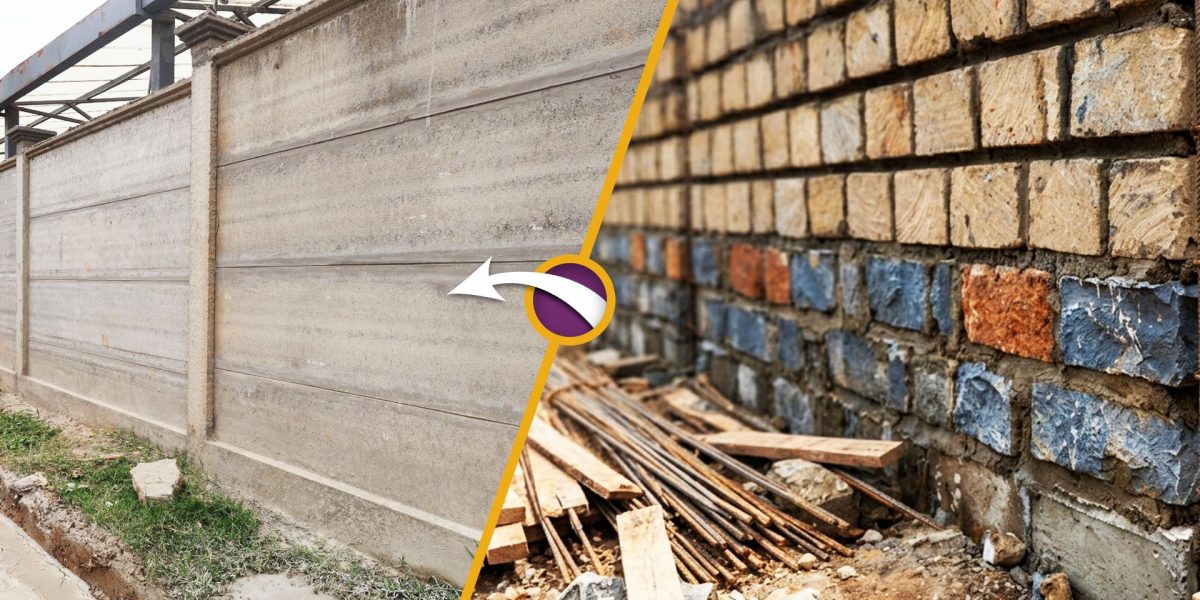
If you’ve ever walked past a modern office block, apartment complex, or industrial facility and admired its clean lines and solid construction, there’s a good chance Precast Concrete Panels played a major role in building it.
Despite being widely used in construction around the world, many people—including developers, property owners, and even some contractors—don’t fully understand how powerful this building method really is.
Traditionally, concrete structures were poured on-site, requiring extensive formwork, curing time, and labor. Today, however, construction technology has evolved. With Precast Concrete Panels, entire wall sections, floors, staircases, and structural elements are manufactured in a controlled factory environment and then transported to the construction site for installation.
The result? Faster construction, higher quality, and more durable buildings.
But beyond these obvious benefits, there are several lesser-known facts that make Precast Concrete Panels one of the most innovative and efficient building solutions available today.
In this article, we explore 10 things you probably didn’t know about Precast Concrete Panels, and why they are transforming the future of construction.
Why Precast Concrete Panels Are Becoming So Popular
Before diving into the surprising facts, it helps to understand why Precast Concrete Panels are gaining momentum in the construction industry.
Construction projects today face several major challenges:
- Rising labor costs
- Tight project deadlines
- Safety concerns
- Environmental regulations
- Quality control issues
Precast construction solves many of these problems because the panels are manufactured off-site in specialized facilities where every element is carefully controlled.
This method allows builders to:
- Reduce construction time significantly
- Improve structural quality
- Lower labor requirements
- Minimize waste
- Achieve consistent finishes
Developers also appreciate the predictability. With Precast Concrete Panels, construction becomes more like assembling components rather than building everything from scratch.
Now let’s explore the fascinating facts most people don’t know.
10 Things You Didn’t Know About Precast Concrete Panels
1. Precast Concrete Panels Can Speed Up Construction by Months
One of the biggest advantages of Precast Concrete Panels is how dramatically they reduce construction timelines.
Because panels are produced in factories while site preparation is happening simultaneously, two phases of construction occur at the same time. Once the panels arrive on-site, installation can happen incredibly quickly.
In many cases, entire building floors can be assembled within days instead of weeks.
For developers, this means:
- Faster project completion
- Earlier occupancy
- Quicker return on investment
Time savings alone often justify the use of precast systems.
2. They Are Manufactured with Exceptional Precision
Unlike traditional concrete poured on-site, Precast Concrete Panels are manufactured using specialized molds, advanced machinery, and strict quality control systems.
This ensures:
- Perfect dimensions
- Consistent strength
- Smooth finishes
- Reduced structural defects
Since everything is produced in a controlled environment, weather conditions do not affect curing or quality.
The result is a level of precision that is difficult to achieve with conventional on-site construction.
3. Precast Concrete Panels Are Extremely Durable
Concrete is already known for its durability, but Precast Concrete Panels take durability even further.
Because they are manufactured under optimal conditions, the panels develop:
- Higher compressive strength
- Improved density
- Better resistance to cracking
Precast structures are designed to withstand:
- Harsh weather
- Heavy loads
- Fire exposure
- Moisture penetration
Many precast buildings remain structurally sound for 50 to 100 years or more.
4. They Improve Construction Safety
Construction sites can be dangerous environments, especially when dealing with heavy materials and complex formwork.
Using Precast Concrete Panels significantly improves safety because much of the work happens off-site in controlled manufacturing facilities.
This reduces:
- On-site labor
- Scaffolding requirements
- Formwork hazards
- Exposure to bad weather
With fewer workers and simpler installation processes on-site, accident risks drop considerably.
5. Precast Concrete Panels Offer Excellent Fire Resistance
Fire safety is a major concern in modern buildings, especially in urban environments.
Concrete is naturally fire-resistant, and Precast Concrete Panels provide excellent protection against fire spread.
Unlike steel or wood structures that can weaken quickly under high temperatures, precast panels maintain structural stability for much longer.
This makes them ideal for:
- Residential apartments
- Commercial buildings
- Hospitals
- Schools
- Industrial facilities
Many building codes actually favor precast systems for their fire performance.
6. They Provide Outstanding Sound Insulation
Noise pollution is a major issue in cities. Fortunately, Precast Concrete Panels are excellent at blocking sound transmission.
Their density and thickness help reduce:
- Traffic noise
- Machinery vibrations
- Neighboring apartment noise
- External environmental sounds
This makes precast construction highly desirable for:
- Hotels
- Apartments
- Office buildings
- Educational facilities
Occupants enjoy quieter and more comfortable living and working spaces.
7. Precast Concrete Panels Are More Sustainable Than You Think
Many people assume concrete is not environmentally friendly. However, Precast Concrete Panels can actually support sustainable construction practices.
Factories producing precast panels can:
- Recycle water used during production
- Reuse leftover materials
- Minimize construction waste
- Optimize material efficiency
Additionally, the durability of precast structures means buildings last longer, reducing the need for frequent reconstruction.
Energy efficiency can also be improved when precast panels include insulation layers.
8. They Can Be Designed to Look Beautiful
Some people mistakenly believe concrete buildings look dull or industrial. In reality, Precast Concrete Panels can be incredibly versatile in design.
Architects can customize panels with:
- Textured finishes
- Decorative patterns
- Exposed aggregates
- Color pigments
- Brick or stone facades
This allows designers to achieve unique architectural styles without sacrificing structural strength.
Modern buildings around the world showcase how Precast Concrete Panels combine engineering with aesthetics.
9. Precast Concrete Panels Reduce Long-Term Maintenance Costs
Building owners often focus on initial construction costs, but long-term maintenance is equally important.
One of the major advantages of Precast Concrete Panels is their low maintenance requirements.
Compared to other building materials, precast panels:
- Resist corrosion
- Resist pests
- Do not rot or warp
- Maintain structural integrity for decades
This means fewer repairs and lower operational costs over the lifetime of the building.
For developers and facility managers, that’s a significant financial benefit.
10. Precast Concrete Panels Support Modern Modular Construction
Modular construction is transforming the global building industry, and Precast Concrete Panels play a key role in this evolution.
Because panels are manufactured as standardized components, they can easily be integrated into modular building systems.
This allows developers to:
- Assemble buildings faster
- Reduce construction waste
- Maintain consistent quality across projects
- Scale construction efficiently
Many modern hospitals, schools, hotels, and apartment complexes now rely heavily on precast modular systems.
Recommendations for Using Precast Concrete Panels
If you’re planning a construction project, there are several best practices to follow when considering Precast Concrete Panels.
First, work with experienced precast manufacturers who understand structural engineering, logistics, and installation requirements.
Second, involve precast specialists early in the design phase. Early collaboration helps optimize panel sizes, transportation logistics, and installation methods.
Third, ensure your project team—including architects, engineers, and contractors—understands precast construction techniques.
Finally, plan for transportation and lifting equipment. Since precast panels are large and heavy, proper site access and cranes are essential for smooth installation.
When executed properly, Precast Concrete Panels can dramatically improve project efficiency and performance.
Conclusion
The construction industry continues to evolve as new technologies reshape how buildings are designed and constructed.
Among these innovations, Precast Concrete Panels stand out as one of the most practical and transformative solutions available today.
They offer a powerful combination of:
- Speed
- Precision
- Durability
- Safety
- Sustainability
- Design flexibility
While many people are familiar with concrete as a building material, far fewer realize the full potential of precast systems.
From faster construction timelines to better long-term performance, the benefits of Precast Concrete Panels make them an increasingly popular choice for developers, architects, and contractors around the world.
As urbanization grows and construction demands increase, precast technology will likely become even more central to the future of modern building.
If you’re looking for a smarter, faster, and more reliable construction method, Precast Concrete Panels may be the solution you didn’t know you needed.